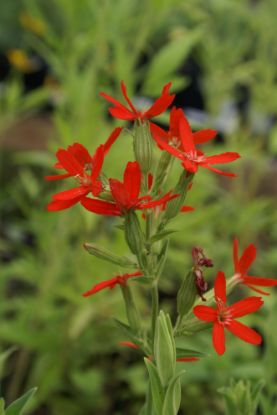
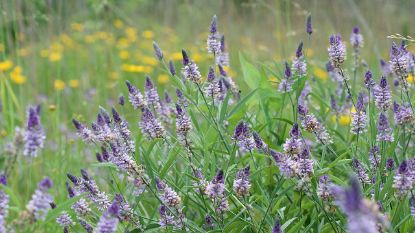
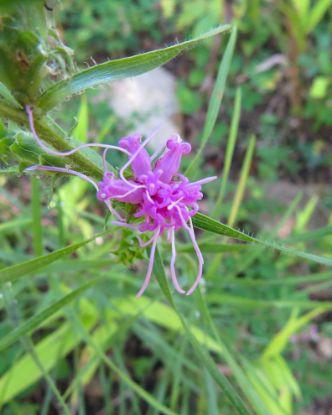
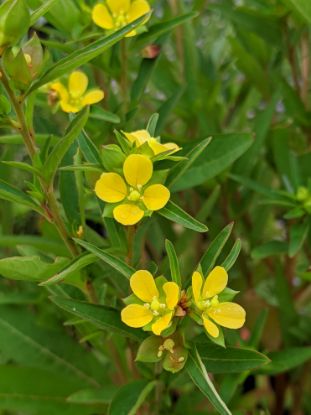
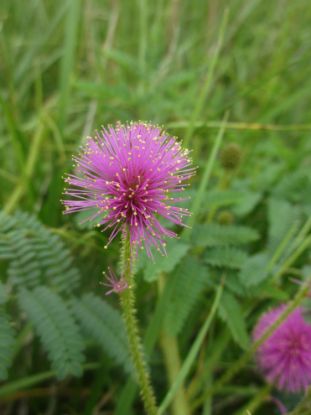
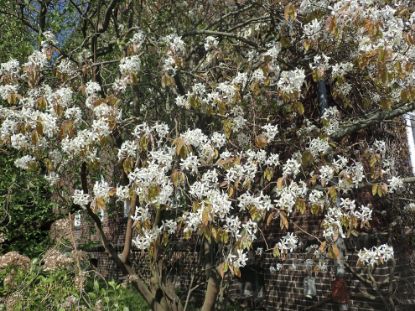
Likes some shade. Soil must be well drained. Plant multiple and allow for disturbed soil for better chance of reproduction. Spreads slowly. Sticky stems trap insects and the plant's enzymes break down the insect bodies.
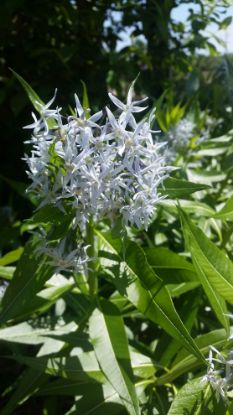
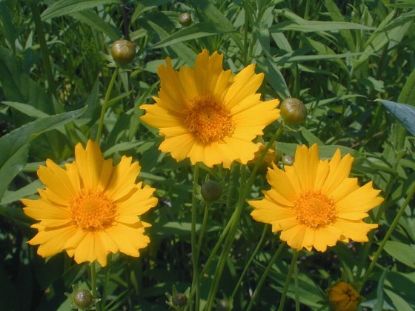
Native to the southern half of Missouri and Southeast Kansas. May be used as a ground cover with a long, early summer bloom. Often found in rocky and acidic soils and prefers partial to full sun but tolerates lots of conditions.
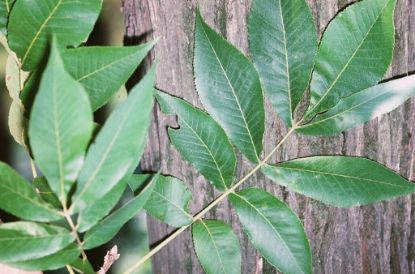
The Carya genus supports 200 butterfly and moth species (including rare Hickory Hairstreak Butterfly), nuts are eaten by lots of wildlife (including humans), and Tracy's favorite feature is that bats can roost under the shaggy bark.
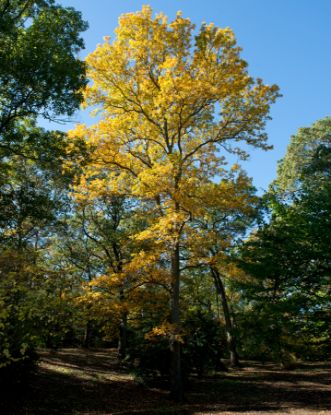
A fantastic tree for wildlife - insects, birds, mammals (including bats). Even humans can eat the nuts (which the tree takes 40 years to produce). Large, slow growing, strong tree. Plant this tree for the next generation.
Great texture for the garden. Stays more compact in full sun conditions. May be cut back after blooming or groomed into a short hedge. Prefers moist sites but also grows in rocky sites.
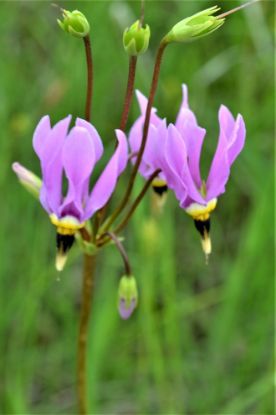
Very interesting flowers ranging in color from white to purple; an early source of pollen for bees (mostly bumblebees). The plant disappears in summer, but will return again the following spring. Can be difficult to establish.
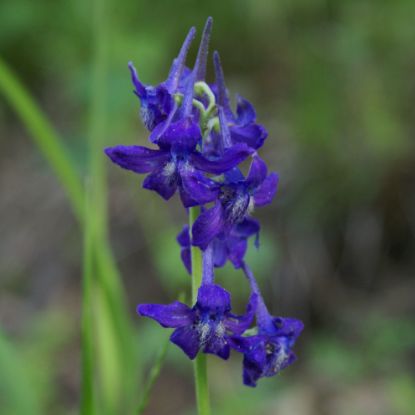
A spring ephemeral; rises and blooms quickly in spring, then disappears. Prefers rich, well-drained soil and afternoon shade from heat. Foliage poisonous to mammals.
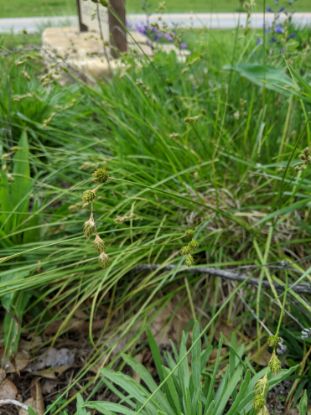
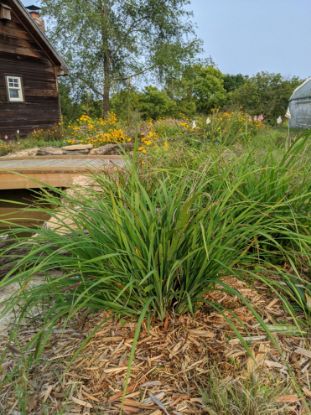
This sedge can take a wide range of conditions. Good for a rain garden or ground cover. Short, mounding, with thin blades, and spiky oval seed heads with a golden brown fall color.
Sedges have edges – feel the triangular stems. These short, grass-like plants add texture to the garden and create a nice ground cover. Birds eat the seeds.